
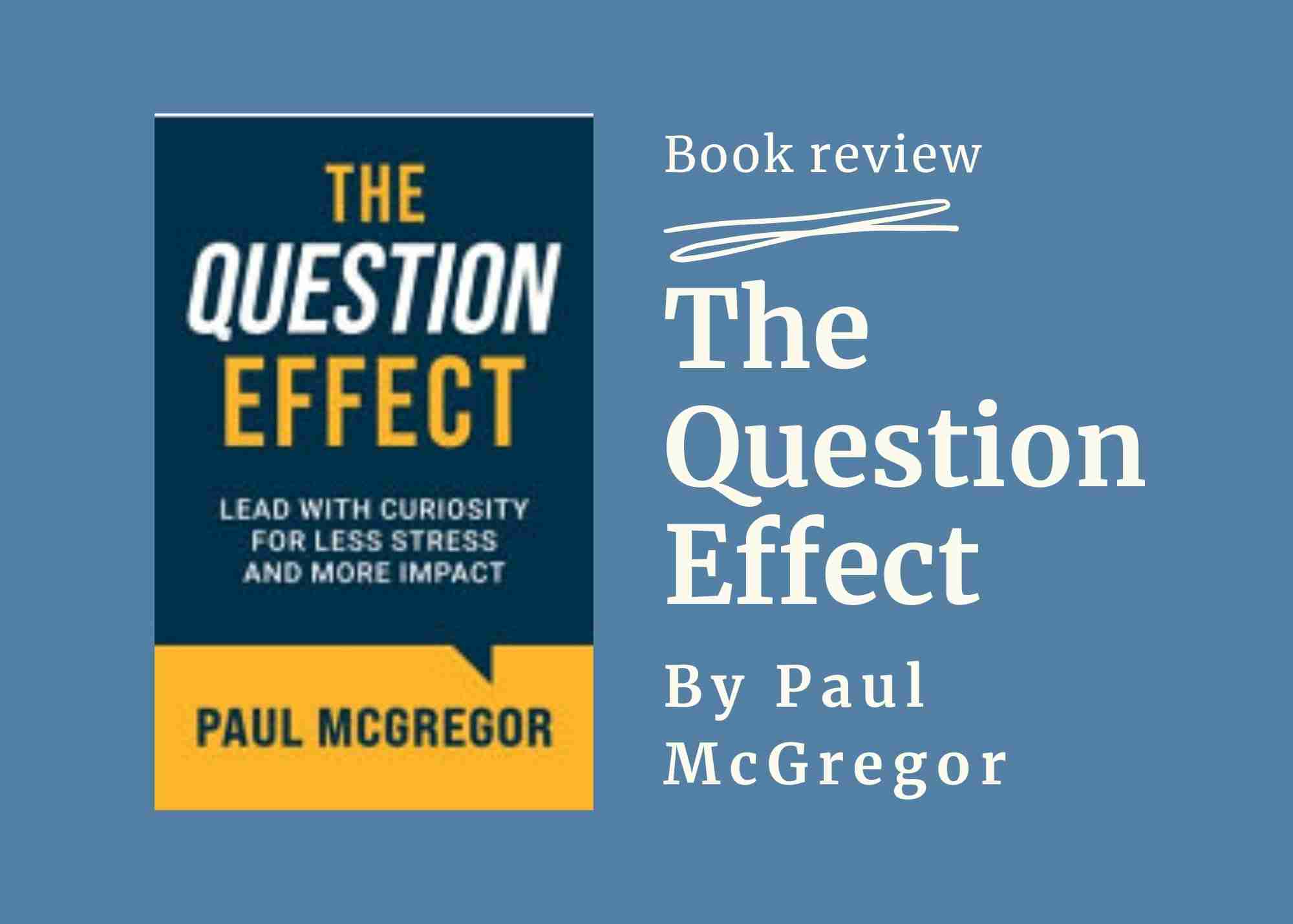
“It means starting conversations differently – with curiosity rather than certainty – and trusting that better solutions will emerge as a result.”
This quote from Paul McGregor’s The Question Effect captures the book’s central challenge: can we let go of our need for certainty and trust that better questions will lead to better outcomes?
Paul organises the book around seven key areas: vision, strategy, culture, perspectives, experience, conflict, and learning. This structure makes it easy to return to whichever area is most pressing at any given time. The downloadable toolkit of questions provides a practical way to reflect on and apply the concepts to your own situation.
Real credibility through real failures
What sets this book apart is Paul’s willingness to share what didn’t go well. His reflections on his own experiences flow throughout the book, and I enjoyed these frank insights as both a local Nelsonian and someone working in the public sector.
The discussion about ‘reading the room’ particularly gripped me. Paul describes a meeting that went horribly wrong when he didn’t trust his gut feelings. His reflection on treating emotions and intuition as information to take seriously, but not to blindly trust, and instead to ask follow-up questions to verify them, is a really useful way to navigate those situations where you sense something isn’t quite right but don’t any have hard facts to draw on.
The wheel of emotions on page 200 provides fantastic support for observing and naming what emotions are emerging, identifying what’s behind them, and gaining more emotional freedom when responding to a situation.
The tension between learning and accountability
The concept of managing learning rather than managing outcomes is particularly relevant to me when considering an upcoming project which will include setting SMART goals to report on.
Paul advises: “Try something, see what happens, and adjust. When things don’t go as expected, it’s not a failure but feedback.”
Perspectives and genuine engagement
Here’s a great question: “It’s one thing to invite different voices to the table; it’s another to adapt when their feedback challenges what we were thinking. Are you prepared to be uncomfortable?”
Paul continues: “Asking for diverse perspectives is tokenistic without this openness to change. People quickly sense when their input isn’t truly valued.”
Anyone who has worked in local government understands the tension between having an open, adaptive process and the need to meet deadlines and reach decisions. This is a valuable reminder not to put deadlines above genuine engagement and willingness to change our plans.
Vision, mission, etc
The breakdown of the slippery terms ‘vision, purpose, strategy, mission and culture’ on pages 59–60 is worth the price of the book on its own. These terms get used interchangeably and imprecisely so often that having clear definitions is invaluable.
Putting it into practice
I’ve started using empathic curiosity more consciously when meeting with clients, preparing for meetings differently and leading with different questions. It feels slightly uncomfortable, but it’s helping me have different conversations that yield new information I might not otherwise have gained.
The book has also challenged my plans for 2026. After a year of intense learning and experimentation around AI in 2025, I have a steadier year focused on delivery planned for 2026. But The Question Effect argues that exploration of possibilities is the most valuable use of time, and this has made me realise I still need to allow time for experimentation.
The Question Effect offers a practical, honest guide to leadership through questions rather than certainty. I easily adapted the question categories to my solo business and client work, but team leaders and managers within public sector and not-for-profit organisations will gain even more from Paul’s discussions about the unique challenges and opportunities of teams and workplaces.
Click here to purchase The Question Effect.