
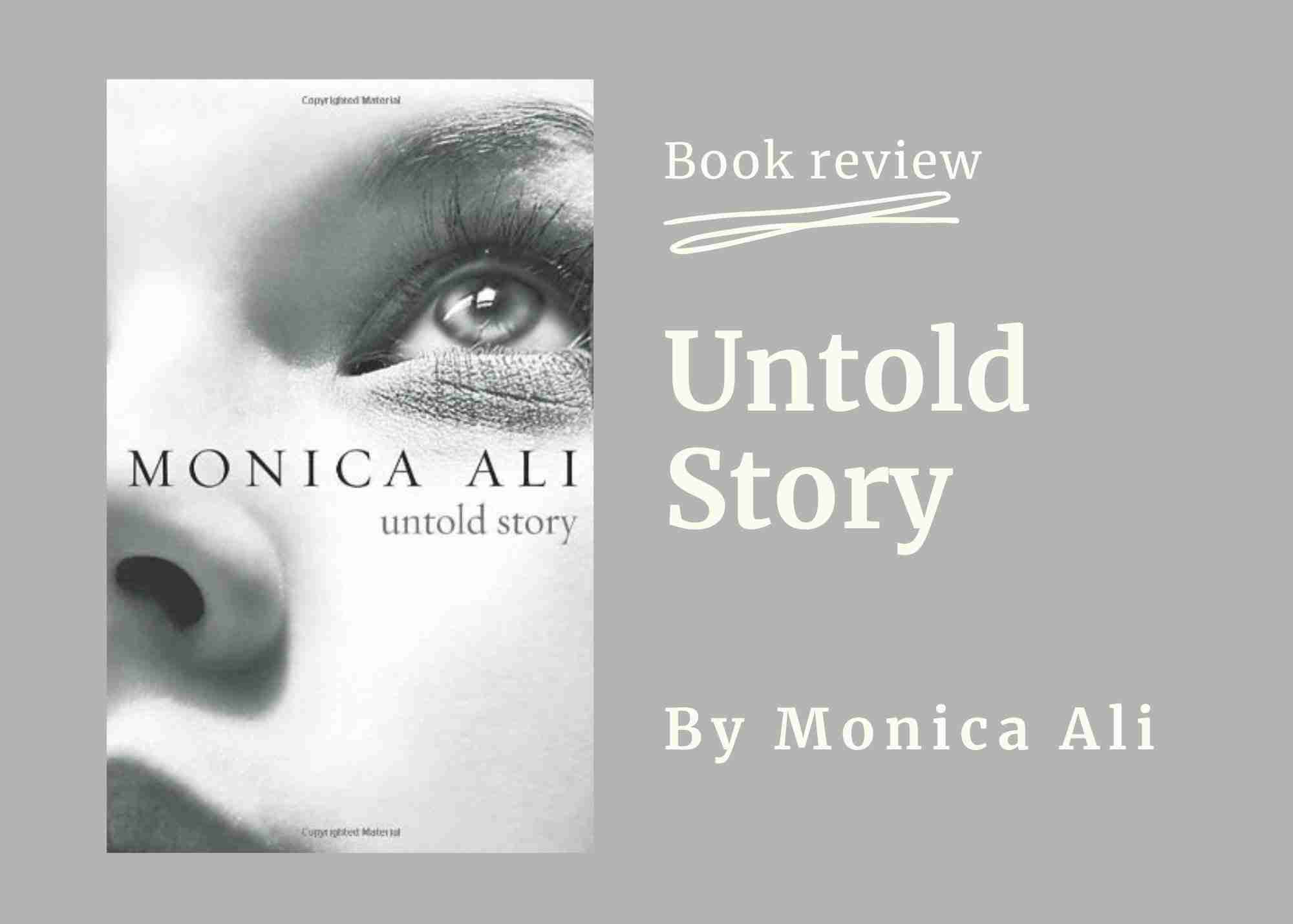
By the end of ‘Untold Story’, I still didn’t know what its heroine wanted – and that uncertainty is exactly what makes the novel linger. What starts as a playful “what if” scenario gradually reveals something more uneasy: a story about escape that never quite delivers freedom.
Monica Ali’s premise is disarmingly simple. In this fictional reimagining, Princess Diana fakes her own death and begins a new life in obscurity as Lydia. She’s no longer photographed, adored or dissected. She has space, anonymity, and the possibility of choosing who she wants to be. On the surface, it appears to be a gentle reimagining of a life cut brutally short. But Ali isn’t interested in granting her protagonist a clean slate, and that’s where the novel starts to bite.
What struck me most was how unresolved Lydia remains. She’s a woman with an intensely complex history trying on a simple life, and I never feel confident she’ll stick with it. The novel’s central tension isn’t whether she can remain hidden, but whether she knows what she wants. That question hangs over every interaction and intensifies as the book progresses.
The ending frustrated me at first. I wanted reassurance, some sense of arrival. But the longer I sat with it, the more powerful that ambiguity became. Lydia can’t go back to her old life, but even if she stays where she is, she’s ready to pull the plug at any moment.
Ali captures this instability most clearly through Lydia’s relationships with men. There’s a recurring pattern of push and pull, intimacy and control, connection and withdrawal. Whether it’s her private secretary, her new boyfriend, or the paparazzi photographer who recognises her, Lydia is both using these men and genuinely engaging with them.
She holds a lot of power over them – at least two of them are in love with her, no matter how badly she behaves. Even the radical reinvention of her life can’t prevent the past from sabotaging the present.
This is also where the novel becomes unsettling. Lydia is charismatic and sympathetic, but Ali refuses to sentimentalise her. There’s a cool, manipulative side to her that the book doesn’t excuse or smooth over. But it’s this refusal to ignore this side of her personality that takes this novel from a playful exploration to a deeper understanding of the forces at play in Diana’s life.
Lydia’s emotional volatility, her need for reassurance, her tendency to test and control the men in her orbit continues to complicate her life.
I loved Monica Ali’s novel ‘Love Marriage’ – which is what drew me to this book, more than the subject of Princess Diana. But beneath the personal story, there’s a broader critique of how the trauma of a loveless, highly public royal marriage echoes throughout Lydia’s life, becoming the source of patterns she can’t fully escape.
‘Untold Story’ isn’t the fluffy story you might be expecting. Instead, it’s an uneasy novel about escape and reinvention, showing how wherever we go we take ourselves with us.